
Codiatech Blog
Amazon RDS PostgreSQL Update: Plan the Five Minor Version Upgrades
Amazon RDS now supports PostgreSQL 18.7, 17.12, 16.16, 15.20 and 14.25. Inventory your databases, test the patch and recovery path, and plan a separate major upgrade for PostgreSQL 14.

What Changed on November 26?
According to AWS's November 26, 2026 announcement, Amazon RDS for PostgreSQL now supports minor versions 18.7, 17.12, 16.16, 15.20 and 14.25. AWS recommends updating to address vulnerabilities in earlier PostgreSQL versions and gain community bug fixes. The announcement does not mean that every database has already been upgraded. Teams first need to know which version each instance runs and when its maintenance window falls. This news is about RDS for PostgreSQL; it does not establish the same release schedule for Aurora PostgreSQL or self-managed installations.
Start with a Version and Dependency Inventory
For every RDS instance or Multi-AZ DB cluster, record the engine version, intended minor version, region, application owner, automatic minor upgrade setting and maintenance window. Include read replicas, connection pools, extensions and the application's most important queries in the change record. AWS's upgrade guide explains how to check valid upgrade targets in the console or through the API and CLI. Confirm the path for your actual database before scheduling work. If an environment already runs a newer minor version, this article is not a request to downgrade it.
Separate a Minor Patch from a Major Upgrade
The PostgreSQL project says these releases include security and bug fixes, with possible additional steps after updating in some installations. A minor update within a major line is different from moving from PostgreSQL 14 to 15 or later. Version 14.25 is the community's final PostgreSQL 14 release; community support ended on November 12, 2026. Separately, AWS's RDS calendar lists February 28, 2027 as the end of RDS standard support for PostgreSQL 14. Review those two timelines and any potential Extended Support cost independently. Installing 14.25 does not replace a long-term major version plan.
Defensive Checks Before the Change
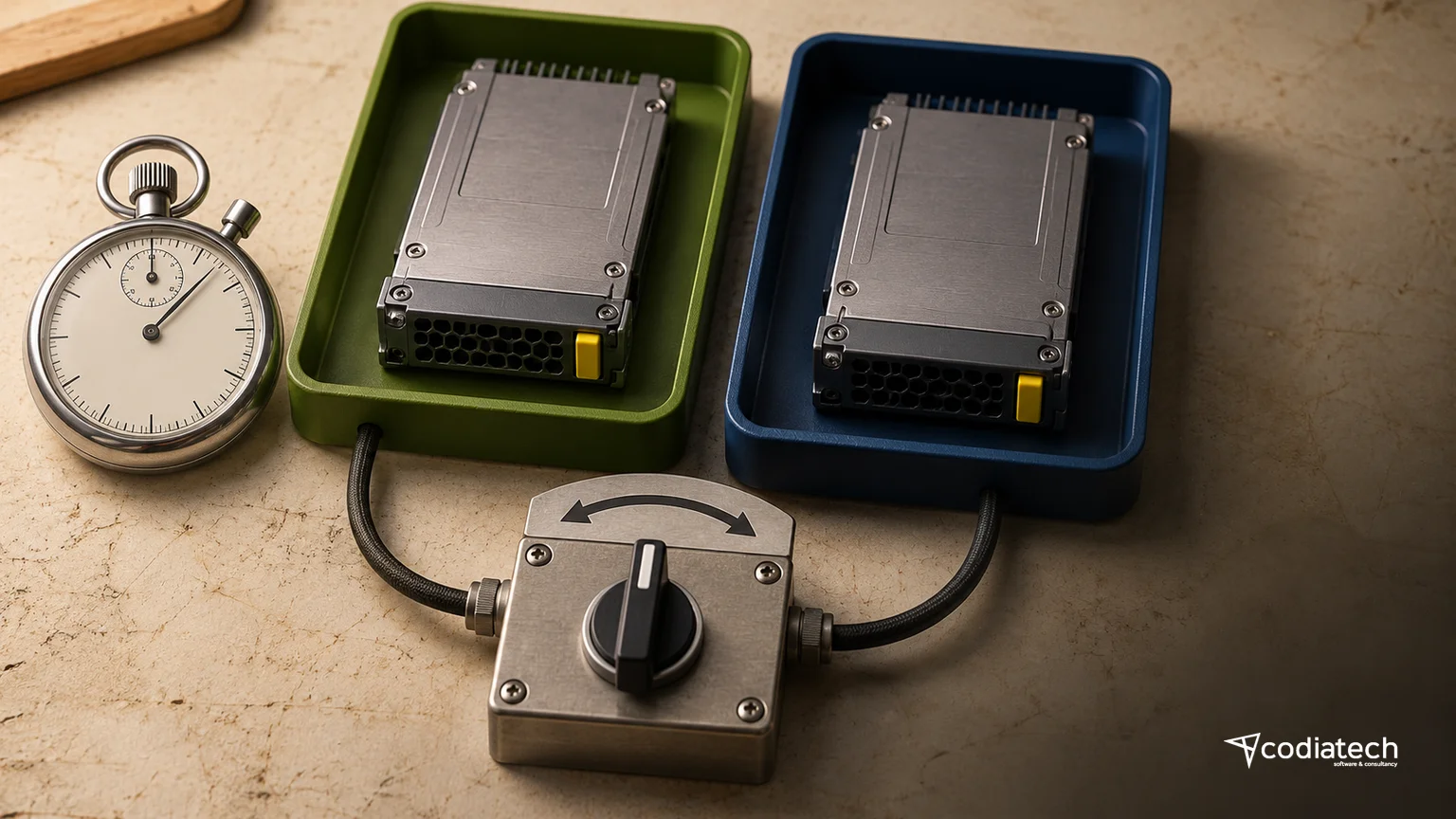
Verify the backup and restore path first. A snapshot existing in a dashboard is not a tested recovery procedure. AWS explains that an engine upgrade cannot simply be reversed; returning to the earlier version requires creating another database from a pre-upgrade snapshot. Discuss the endpoint change, data consistency and acceptable recovery time with the application owner before the maintenance window. Use a non-production copy to exercise critical reads and writes, replica behavior, query latency and extension compatibility. The PostgreSQL update notes identify cases that may need extra index or backup review, particularly when earlier updates were skipped. Apply those checks only where they fit the actual database; do not schedule indiscriminate reindexing.
Maintenance Window or Phased Rollout?
AWS describes automatic minor version upgrades during scheduled maintenance windows and an Organizations Upgrade Rollout Policy that separates eligible resources into first, second and last groups. The policy applies to suitable resources with automatic minor upgrades enabled. A practical approach is to observe a lower-impact environment, leave time to validate its application behavior and then advance to more critical databases. AWS also points to RDS Blue/Green deployments as an option to reduce downtime for minor upgrades. None of these choices is a zero-downtime guarantee. Check the fit for the actual deployment type, replica layout and connection behavior.
What Evidence Closes the Upgrade?
Confirm from RDS events that the upgrade completed and the engine reports the intended version. Record that the application reconnects, key transactions work, errors and latency stay within the team's agreed limits, and replicas are healthy. Check backup health and the recovery objective as well. If PostgreSQL's release notes call for a specific follow-up step relevant to the indexes or backup method in use, put it in the change record. A successful maintenance event alone does not establish that the application behaves correctly.
The Practical Codiatech Decision
Open a change record for each database in the affected version families: current and target versions, owner, test results, maintenance window, monitoring and recovery trigger. If PostgreSQL 14 is in use, add a separate date for its major version migration. Within Codiatech's cloud services and management and maintenance and customer support work, delivery and operating responsibilities are set for the project and environment. This article makes no claim about a completed customer upgrade, zero downtime or a measured security result.
Primary source: aws.amazon.com