
Codiatech Blog
.NET 11 is here: what should teams using .NET 8/9 do?
Compare .NET 10 LTS and .NET 11 STS through support dates, dependency compatibility and release planning before choosing an upgrade path.
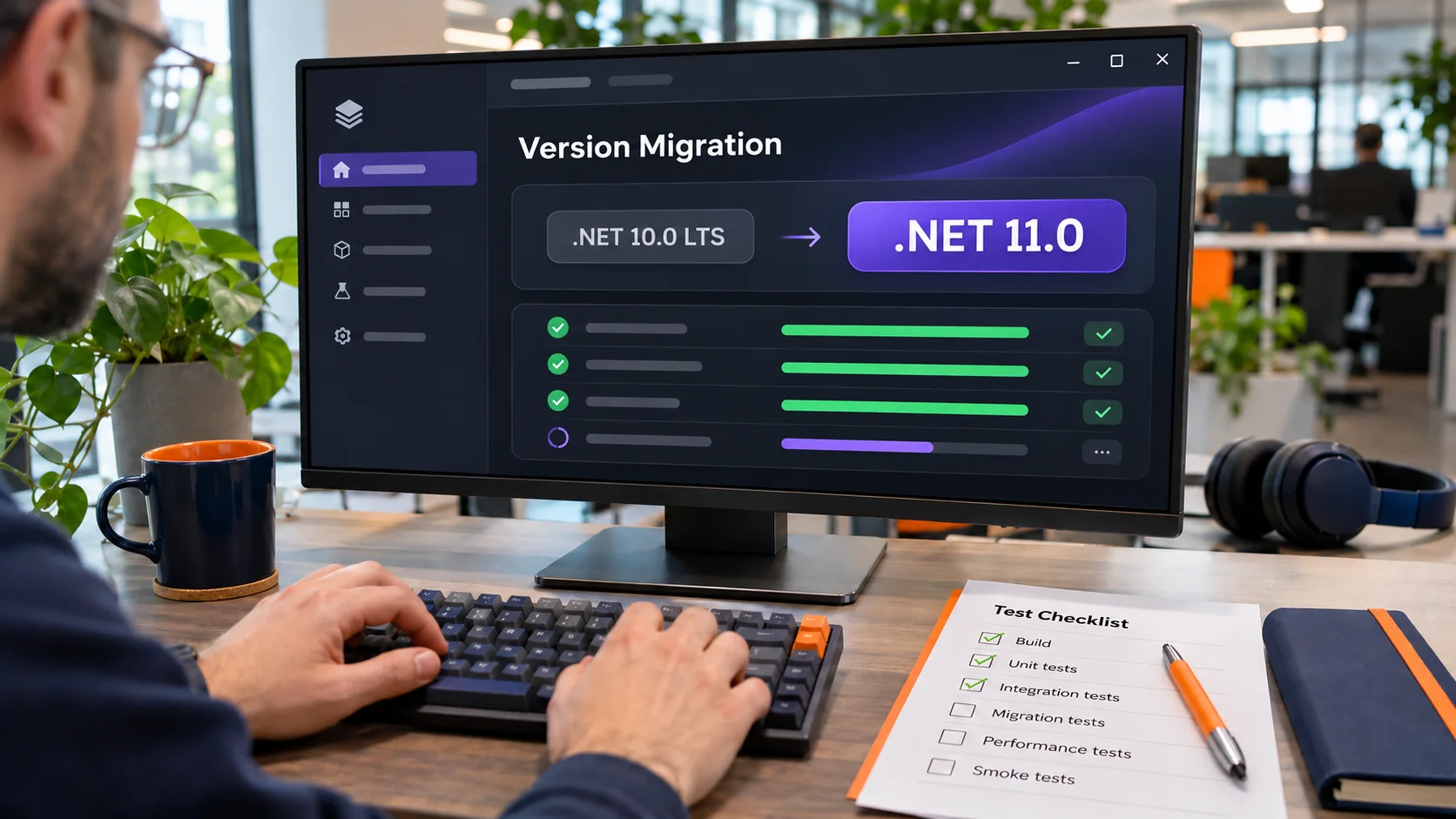
Microsoft released .NET 11 on 10 November 2026. The same date marked the end of official support for .NET 8 and .NET 9. For an application running on an older release, the question is not limited to new features: teams need to know which version will receive updates and how a move would affect their existing systems. The Microsoft .NET 11 announcement and .NET support policy confirm these dates.
.NET 10 LTS or .NET 11 STS?
.NET 11 is a two-year Standard Term Support (STS) release. .NET 10 is the supported Long Term Support (LTS) option; Microsoft's current table lists its end of support as 14 November 2028. LTS and STS receive the same quality of maintenance; the main difference is the length of support. A team seeking a longer maintenance horizon may consider .NET 10. A team that needs a specific capability in .NET 11 and can manage a shorter release cycle may consider .NET 11. Neither is a universal recommendation without examining the application and its dependencies.
What is new in .NET 11?
C# 15 union types, asynchronous validation in ASP.NET Core and OpenAPI 3.2 as the default are among the notable changes. The .NET 11 SDK also includes a project template for an MCP server. Their value depends on the application's needs and tool compatibility; installing the new SDK alone does not automatically migrate an existing application to .NET 11. The official announcement has more detail.
Four checks before migrating
Build an inventory. List the .NET versions targeted by applications, runtimes, NuGet packages, database providers, operating systems and container images.
Check dependencies. Review package and data-provider compatibility, breaking changes and the build pipeline for the chosen release.
Test representative flows. Test API endpoints, authentication, data access and deployment against real usage scenarios. Measure performance on your own workload; a new release does not guarantee a particular speed improvement.
Plan the release. Define the sequence from test to production, what to observe and how to roll back if a problem occurs.

.NET 11 also includes new AI-related tools. However, the Blazor AI components in the announcement are experimental, and the Agent Framework AG-UI hosting integration is in preview. Review each component's maturity and support status before including it in a production plan.
At Codiatech, we assess version, dependency and deployment decisions according to each project's conditions within custom software development and cloud services management. Contact us to define the scope of a migration for your existing application.
Primary source: devblogs.microsoft.com