
Codiatech Blog
GitHub Actions ARM32 retirement: Separate CI from device testing
GitHub-hosted Windows and Linux runners will end ARM32 job execution by December 8. Teams should plan ARM64 or cross-build paths separately from tests on actual 32-bit devices.
What changes by December 8?
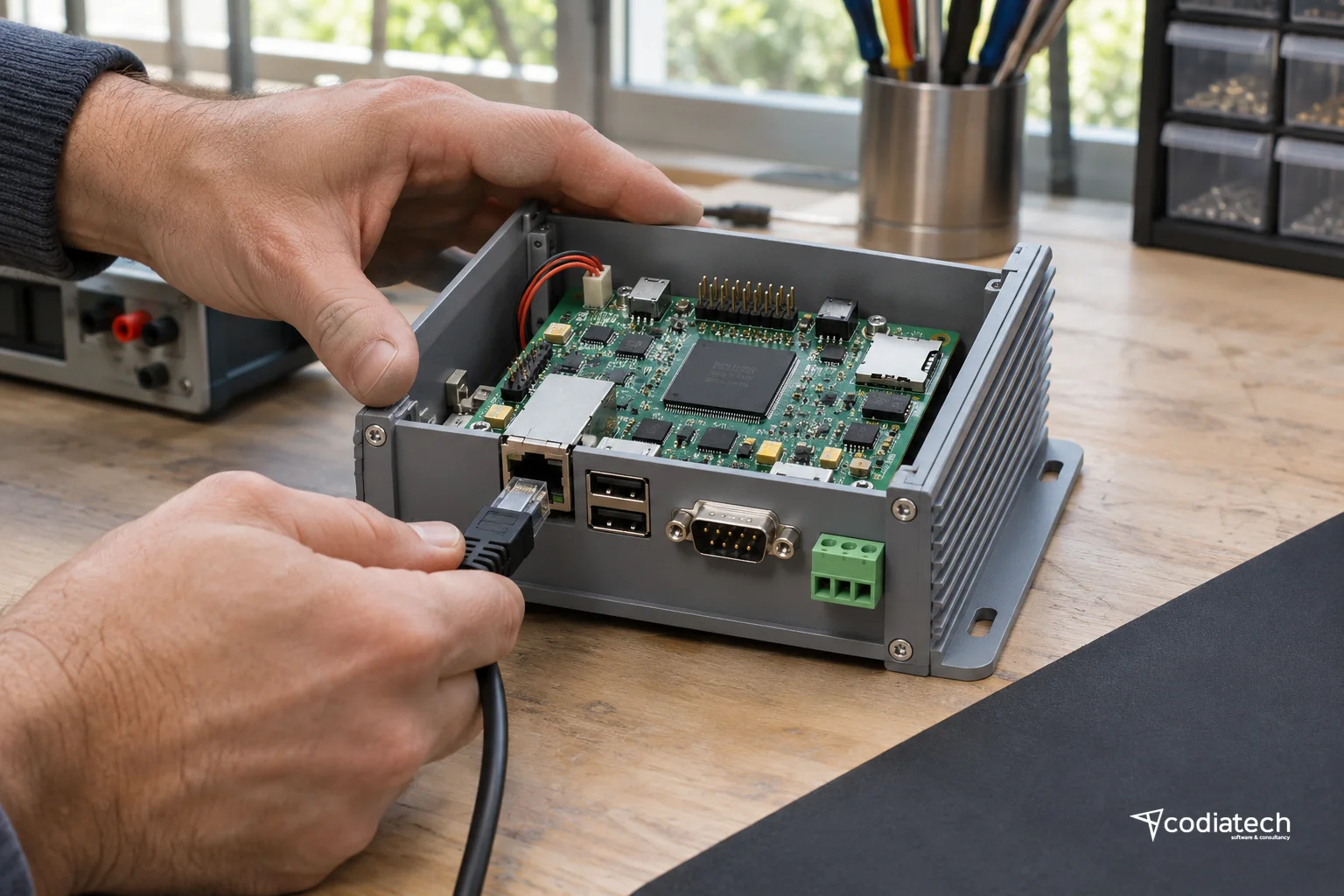
GitHub's November 12, 2026 notice says GitHub Actions hosted runners will end support for ARM32 job execution on Windows and Linux by December 8, 2026. This includes native AArch32 user-space execution. GitHub links the change to the end of Node 20 support and the lack of ARM32 support in Node 24. The notice does not say ARM64 runners are retiring or that all ARM32-targeted applications can no longer be built.
Find jobs that actually depend on ARM32
Inventory runner labels in workflow files, architecture-specific toolchains, tests that execute ARM32 binaries directly, and containers needing a 32-bit user space. Check whether a green build really proves an ARM32 application ran. Record the artifact architecture, test environment, and physical-device validation separately. This inventory identifies which checks need a new home before the retirement date and which can stay on supported runners.
ARM64 is not a substitute for every ARM32 test
GitHub's hosted-runner reference lists ARM64 options for Linux and Windows. Teams can evaluate these for 64-bit ARM workloads or cross-compiling a 32-bit target with a suitable toolchain. Producing a binary on ARM64, however, does not prove it runs in a 32-bit user space or behaves correctly with the target device's operating system, drivers, and network conditions. If a native ARM32 check cannot move to ARM64, mark the lost coverage explicitly rather than declaring the migration complete.
Use three validation layers
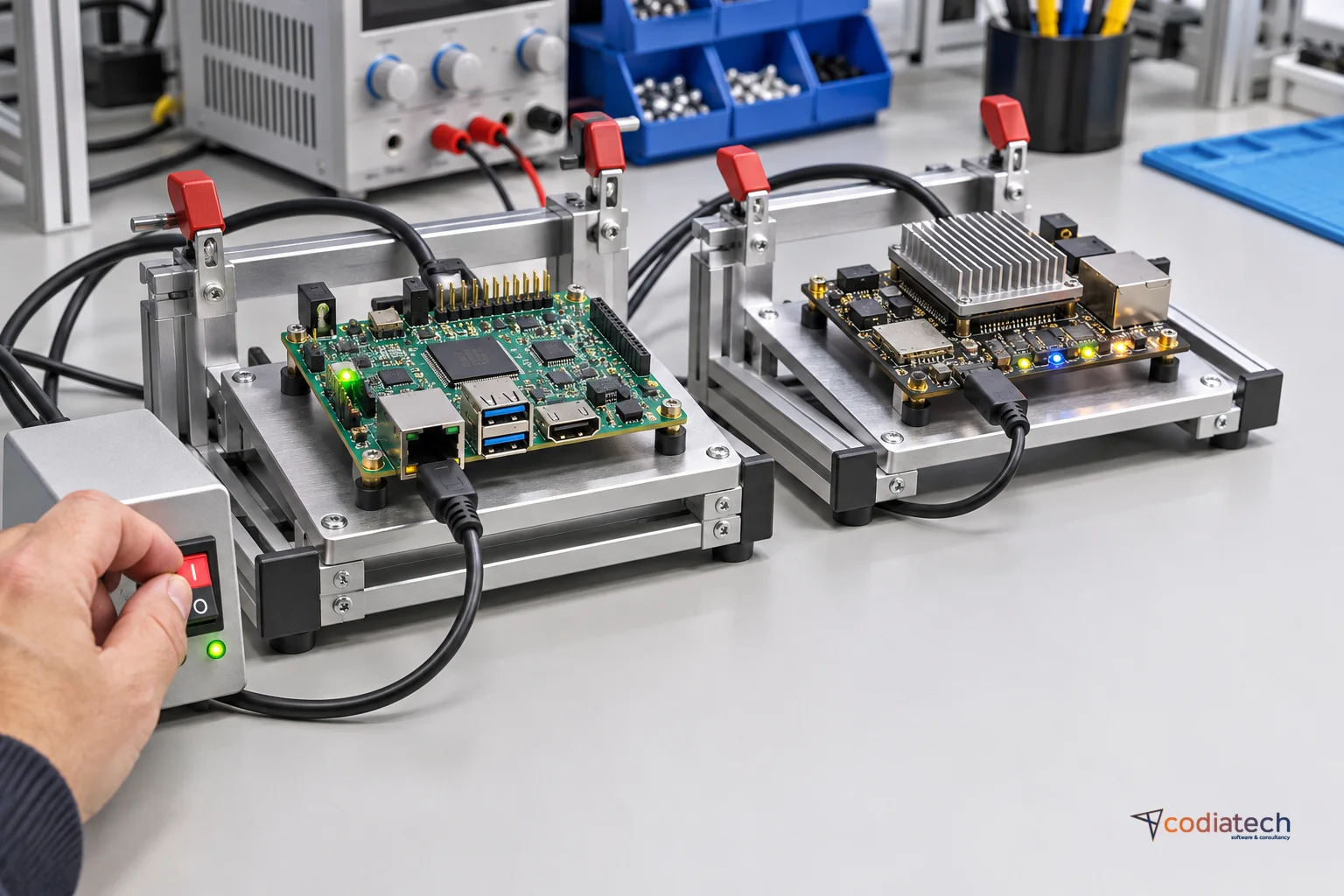
First, build and run static checks on a supported x64 or ARM64 runner. Second, verify the target architecture, dependencies, and packaging of the ARM32 artifact, and run integration checks where appropriate tools exist. Third, execute critical scenarios on a physical 32-bit device, a managed device lab, or a separately operated test environment. For each layer, write down its pass criteria, failure record, and responsible reviewer.
Example: verifying an ARM32 gateway package in CI
Consider an industrial gateway that runs 32-bit Linux. A CI job can build the ARM32 package on a supported runner with a toolchain configured for the target. Record the compiler version and architecture alongside the artifact. For example, use readelf -h to check that the ELF class and machine type match the expected target.
Install that same artifact on a dedicated test device. Verify that the application starts, answers a sample network request, and still behaves as expected after a restart. If the build passes but the package fails on the device, check the target architecture, ABI, dynamic loader, and library versions. Make the device result visible in the deployment decision.
Is a self-hosted ARM32 runner a safe replacement?
Attaching an ARM32 machine as a self-hosted GitHub Actions runner may look like a quick workaround. GitHub's September 23, 2026 Node 20 retirement note says Node 24 has no official ARM32 support and ARM32 self-hosted runners are no longer supported. Do not present such a runner as a supported long-term CI path. If physical-device testing is required, design a separate lab workflow triggered by a supported runner, with explicit access control, result collection, and maintenance responsibilities.
How should you accept the migration?
Run the old and replacement pipelines against the same sample application for a short comparison period and inspect the ARM32 packages they produce. On the target device, record startup, a core workflow, connectivity, and recovery after a failure. If a check no longer runs in a native ARM32 environment, show which physical or separate-environment test replaces it. Do not close the change on a green CI badge alone; the release owner should review the new coverage map.
The Codiatech decision point
In Codiatech's web and mobile application development, custom software development, and cloud and CI work, build success and device runtime can be separate acceptance criteria. Start by finding affected jobs, preserve real ARM32 validation where needed, and test the replacement path before December 8.
Primary source: github.blog