
Codiatech Blog
Azure Monitor Pipeline: A Bounded OTLP Pilot Plan
Evaluate the Azure Monitor pipeline OTLP preview through a bounded pilot covering cluster ownership, log filtering, interruption tests and total operating cost.
What the New Azure Monitor Pipeline Preview Changes
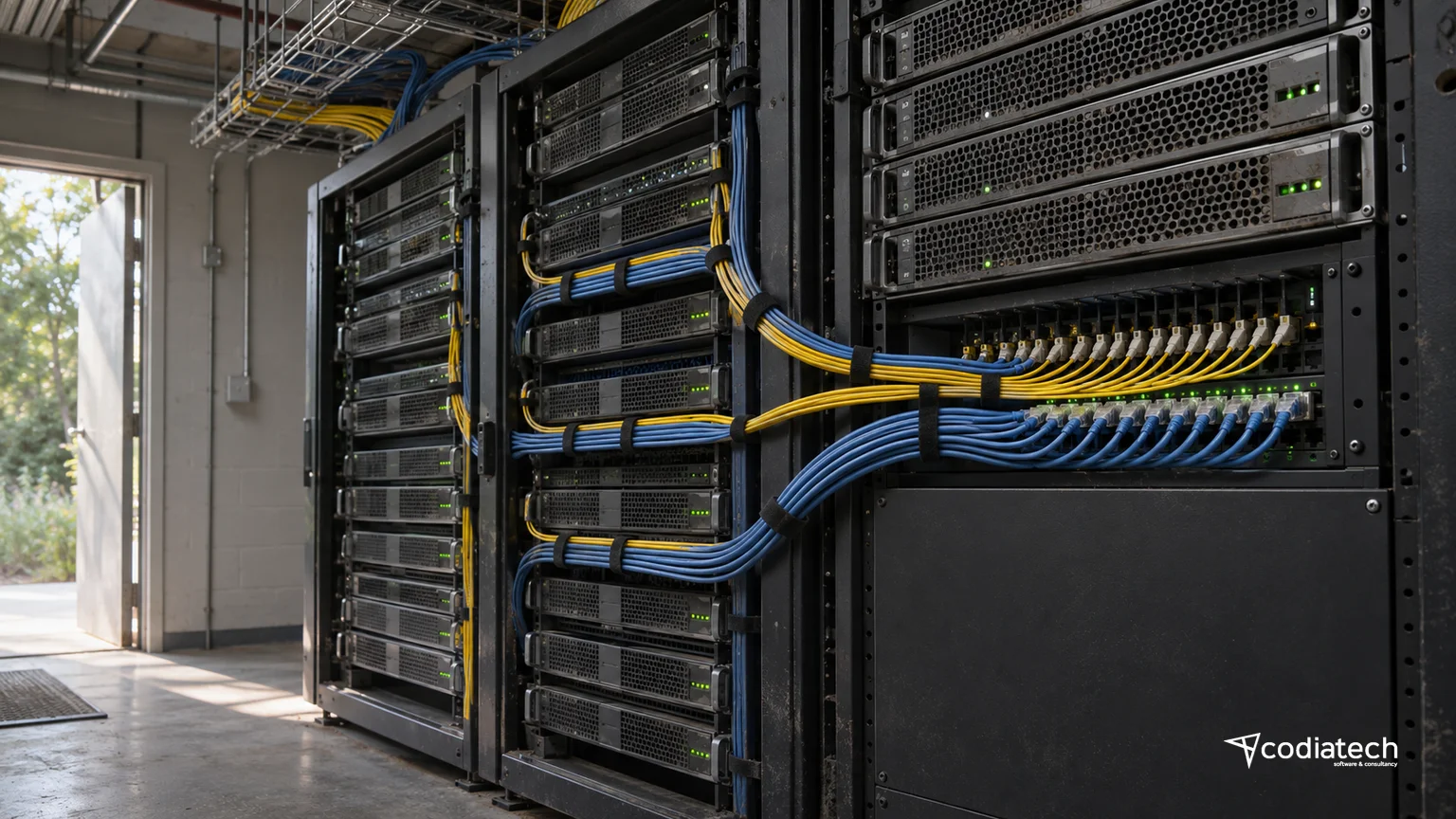
Microsoft’s 23 November 2026 announcement introduces public-preview OTLP logs, metrics and traces in Azure Monitor pipeline. This is not general availability. This preview runs on Arc-enabled Kubernetes, with cluster operations remaining the customer’s responsibility. KQL transformations apply only to logs. No additional pipeline fee does not mean infrastructure or ingestion is free.
The announced OTLP listener uses mutual TLS (mTLS) with automatically provisioned certificates; a managed identity authenticates to Azure Monitor. Enabling persistent storage buffers received telemetry locally through restarts or temporary disconnection, then backfills when connectivity returns. This mechanism does not imply unlimited storage or guaranteed lossless delivery.
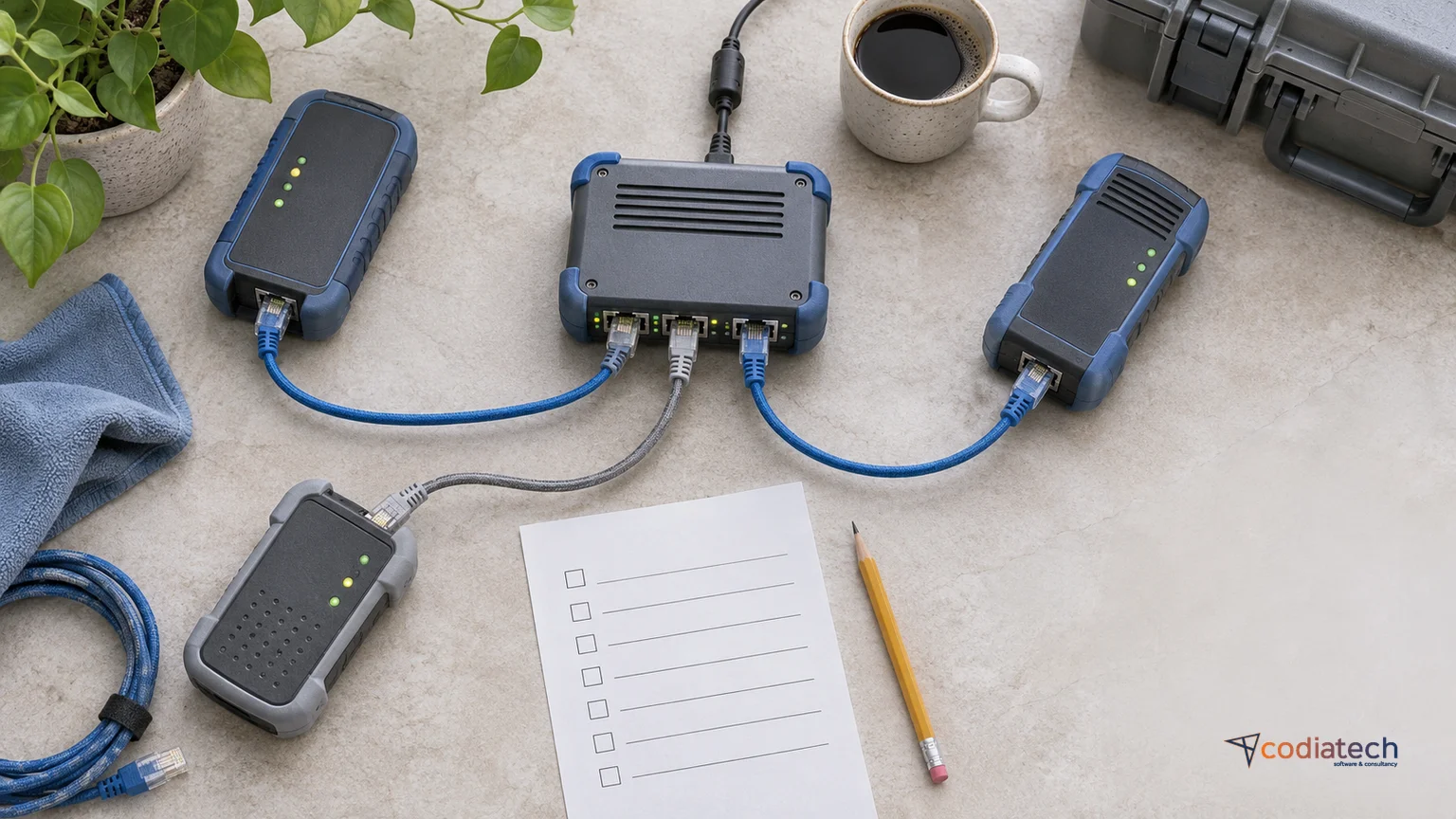
For a business, the useful question is not whether to replace its monitoring stack immediately. It is whether an engineer can investigate a failed transaction with the right evidence, and who maintains the collection layer between applications and analysis. Treat the announcement as an opportunity for a bounded experiment. The plan below is Codiatech’s original editorial recommendation, rather than a report of a completed customer deployment, verified cost reduction or production performance result.
Choose One Workflow Before Choosing More Telemetry
A useful candidate is an order API calling an external system. Define the evidence needed for a successful request, an application error and a timeout. Use synthetic transaction identifiers instead of customer identities, order contents or access credentials. This allows the team to evaluate observability without unnecessarily moving real customer information into a new collection path. Record the existing route and the queries that currently support investigation before changing anything.
The application team should not own acceptance alone. Include the platform operator, a security representative and the person expected to investigate an incident. Agree which alert must remain useful, which question a query must answer and what would stop the experiment. A more attractive dashboard is not sufficient evidence. Finding the same synthetic transaction with the expected context across logs, metrics and traces is a more practical acceptance checkpoint for this scope.
Separate Pipeline Management from Cluster Ownership
The word managed should not be read as a transfer of responsibility for the whole environment. The Microsoft Learn overview explicitly leaves Kubernetes operations and maintenance with the customer. Assess node capacity, storage, network egress and maintenance ownership separately before starting. Existing workloads still need their resource headroom; the collection experiment should not silently compete with the service it is meant to help observe.
A sensible evaluation measures collector-side resource consumption separately from application behaviour. Run the same traffic scenario against the baseline and the pilot, then investigate differences rather than attributing every change to the new component. Document who handles maintenance, certificate renewal and storage pressure. If preview limitations are incompatible with the workload’s operational requirements, defer production adoption. The experiment can still produce useful knowledge without creating a commitment to migrate the environment.
Make Configuration a Reviewable Change
The current CLI and DCR configuration guide directs new deployments to Azure CLI or ARM; it identifies the portal path as the legacy PipelineGroup model. Listener and TLS settings are separated from dataflow rules. An older portal walkthrough should therefore not be treated as an interchangeable instruction set for this preview deployment path.
Keep the proposed change small enough for another engineer to understand. List the cluster, destination workspace, associated rules and intended resource names together. Review the configuration difference before applying it, including whether any existing resource would be overwritten. Preserve the previous configuration securely, without committing private keys or customer payloads to the repository. A rollback instruction should say more than restart the component: it must describe how the application returns to its previous collection destination and how the operator verifies that the earlier path is working again.
Test Identity Boundaries and Sensitive Fields Early
A successful connection is only one part of the experiment. Check which application can reach which listener, whether a client with the wrong identity is rejected and who can read the destination data. Define permissions around operational tasks. A successful test performed with an administrator account does not establish that the production permission model is correct or that an ordinary operator has only the access they need.
Place a harmless, clearly synthetic marker in a test event and inspect where that marker becomes visible. Do not test filtering by sending real passwords or personal information. Reducing unnecessary fields at the application is the first defence; a downstream transformation should not be the only barrier preventing secrets from entering telemetry. Record the access-boundary result separately from the sender’s connection status. This distinction makes a later review more useful than a single green success indicator that combines unrelated checks.
Filter Logs Without Removing Incident Evidence
Do not assume that one transformation policy applies to every signal: the KQL transformations described in this release apply to logs. For each field proposed for removal, ask whether its absence would impair incident diagnosis, security investigation or understanding of the business workflow. Removing a category simply because it is noisy can also remove evidence of an infrequent but important failure. The reduction goal should be specific enough to review.
Compare an original synthetic example with its transformed counterpart. If successful requests are simplified, explicitly check that failure context remains usable. A policy that hides an error under a particular service name or application version should fail acceptance even if it reduces volume. Evaluate savings alongside the ability to complete an investigation. Collecting everything indefinitely and discarding everything aggressively are both weak defaults; the appropriate balance depends on the questions the team has committed to answer and the retention obligations it has.
Verify Destination Arrival During a Controlled Interruption
Design a small, predetermined connectivity interruption in a safe test environment before considering any production exercise. Record the expected event count, test identifier and time interval. After restoring connectivity, check more than application recovery: confirm that the expected evidence can actually be found at the destination. Visible logs are not proof that metrics and traces have arrived correctly. Each signal needs its own destination query.
Keep storage pressure, restart behaviour and delayed arrival as separate test results. Do not assume that any buffer is unlimited or that a feature eliminates data loss. A delayed event can look missing when the investigator searches the wrong time window; the test plan should distinguish these cases. A silent pipeline is not necessarily a healthy pipeline. Assign a separate owner and monitoring check for the collection layer so the system intended to reveal failures does not become an unobserved dependency itself.
Decide on Cost and Acceptance Together
The final review should cover ingestion volume alongside cluster resources, storage needs, network usage and operational effort. There is no defensible universal saving percentage or capacity number for every organisation. Compare the experiment with the organisation’s own baseline, and acknowledge that a short exercise may not represent seasonal traffic or rare incidents. Preview conditions and support requirements belong in the decision, rather than being treated as footnotes.
The useful deliverable is a short decision record: which workflow was exercised, which signals were verified, what remains uncertain and whether the previous path can be restored. This may require evaluating cloud services and management together with system integration. Expand to a second application only when the agreed checks support that decision. If uncertainty remains, keep the scope bounded. Following a product announcement can then produce a concrete architectural learning without turning into an uncontrolled production migration or an unsupported promise of lower costs.
Primary source: techcommunity.microsoft.com